Research and Training Clusters

Structural Biology & Biophysics

Biophysics & Structural Biology

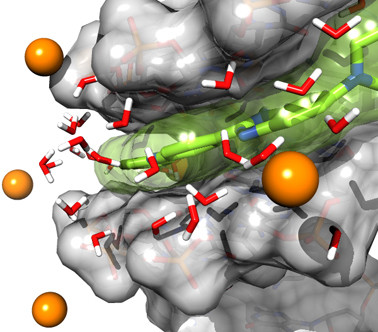
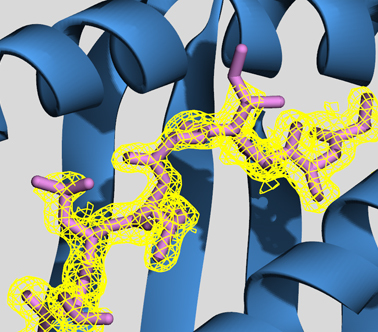
Researchers in structural biology and biophysics study the structures, dynamics, architecture, and physical behavior of biological molecules and biomolecular assemblies using complementary physical, biochemical, and computational techniques.

Learn more about Biophysics & Structural Biology Research and Faculty


Genomics & Proteomics

Genomics & Proteomics

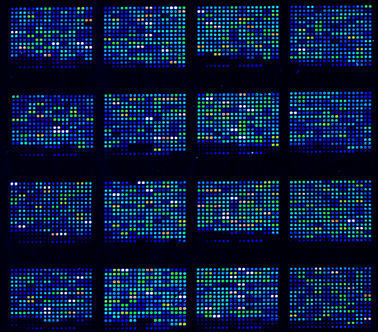
Researchers in genomics and proteomics study the organization and products of genomes, especially the functional proteins, aiming to understand biological pathways, networks, and their relationships with the information content of the cell. 

Learn more about Genomics & Proteomics Research and Faculty

Cancer Biology

Cancer Biology

Researchers in cancer biology perform basic and translational research relating to the detection, prevention, onset, and treatment of cancer. Expertise includes oncogenes and growth factors, cell adhesion, metastasis, tumor microenvironment, and tumor immunology.

Learn more about Cancer Biology Research and Faculty

Immunology & Infectious Disease

Immunology & Infectious Disease

Researchers in immunology and infectious disease use cross-disciplinary approaches to investigate the mechanisms pathogen virulence, immunological responses required for control, and the interactions between host and pathogen.

Learn more about Immunology & Infectious Disease Research and Faculty

Chemical Biology & Molecular Pharmacology

Chemical Biology & Molecular Pharmacology

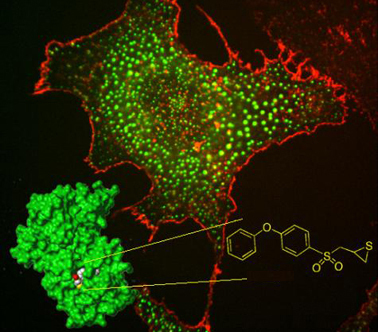
Researchers in chemical biology and molecular pharmacology study drug action and drug design and develop synthetic compounds to probe and control biological process.

Learn more about Chemical Biology & Molecular Pharmacology Research and Faculty

Computational Biology & Bioinformatics

Computational Biology & Bioinformatics

Researchers in computational biology and bioinformatics study large datasets such as sequences, microarrays, and metabolic networks, and use computational algorithms to model and understand complex biological systems. 

Learn more about Computational Biology & Bioinformatics Research and Faculty

Molecular, Cellular, & Developmental Biology

Cellular & Molecular Biology

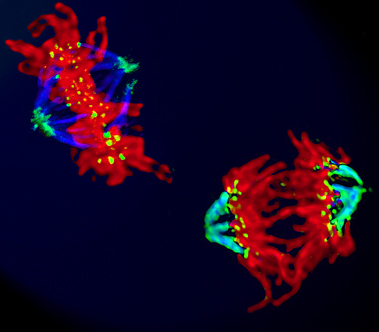
Researchers in cellular and molecular biology aim to understand the functions and mechanisms of biological processes at molecular and cellular level and investigate how they contribute to cell and organism development.

Learn more about Cellular & Molecular Biology Research and Faculty

Neuroscience

Neuroscience

Researchers in neuroscience draw on intellectual traditions and technical capabilities existing in the fields of biology, chemistry, physics, and mathematics, to study the structures, functions, and mechanisms of the nervous system and brain.

Learn more about Neuroscience

Apply Now

Eliminating barriers for advancing biomedical science

The Integrated Biomedical Sciences Graduate Program at the University of Notre Dame is a cross-departmental PhD program for research and training in a range of fields in the biomedical sciences. Scientists across the campus, representing 55 different research groups, are organized into thematic Research and Training Clusters that offer students the opportunity to engage in cutting-edge biomedical research that transcends traditional departmental and disciplinary boundaries. Explore our program here, or download a brochure that describes the key aspects.

Recent News

Ana Flores-Mireles, Felipe Santiago-Tirado

Researchers identify key fungal genes driving urinary catheter infections

Author: Deanna Csomo Ferrell

Relying on a urinary catheter is a standard part of medical care for hundreds of thousands of patients each year. Unfortunately, the device carries the risk of catheter-associated urinary infections (CAUTIs), where bacteria are widely recognized as the primary cause. And yet, many patients…
Mayland Chang and Shahriar Mobashery walk down a sunlit hallway lined with bookshelves.

Researchers unlock details of the molecular machine critical for C. diff infections

Author: Deanna Csomo Ferrell

Researchers at the University of Notre Dame and collaborators have disclosed the core assembly of the germinosome, which is alarm system that awakens the dormant spores of Clostridioides difficile (C. diff), a health threat that causes about half a million infections and about 30,000 deaths a year.…

Upcoming Events

Wed Sep 2, 2026

David Mobley (UC, Irvine)

"Making Computational Biomolecular Design a Reality" Originally published at chemistry.nd.edu.

Thu Sep 10, 2026

Marcus Fischer (St. Jude Research)

    Warren Center Lecture Like a Champion Series "Making Waves in Structure-based Ligand Discovery" Originally published at chemistry.nd.edu.

Mon Sep 14, 2026

2026 Carrier Medal Ceremony & Lecture

Join the College of Science at the University of Notre Dame for the fifth annual Carrier Medal Ceremony & Lecture, honoring Frances Arnold, Nobel Laureate and the Linus Pauling Professor of Chemical Engineering, Bioengineering and Biochemistry; Director, Donna and Benjamin M. Rosen Bioengineering…