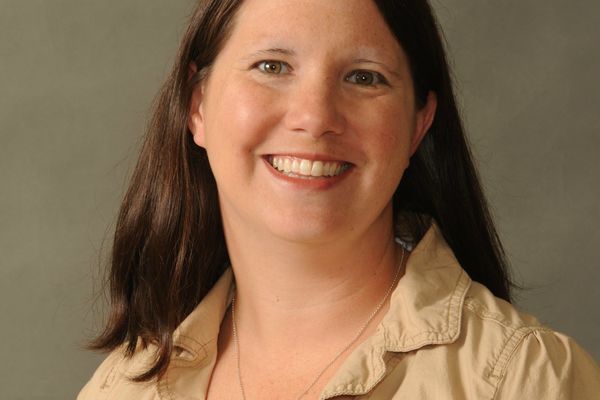
Expression of the tumor suppressor protein adenomatous polyposis coli (APC) is lost in up to 70% of women with breast cancer. Research in the laboratory of Harper Cancer Research Institute member Jenifer Prosperi has shown that breast cancer cells with decreased APC are also resistant to doxorubicin (Adriamycin), a common...
Half a Million Dollars FY 2019 DURIP Grant is Awarded to the Center for Informatics and Computational Science (CICS) for Artificial Intelligence (AI) Research applied to Scientific and Engineering Applications The Air Force Office of Scientific Research (AFOSR) Computational Mathematics Program has awarded half a million dollars of the FY...
Notre Dame’s Center for Nano Science and Technology (NDnano) is accepting proposals from Notre Dame faculty in the Colleges of Science and Engineering for one-year seed grants. The purpose of the funding is to stimulate cross-college and cross-disciplinary research that broadens and deepens the understanding of complex scientific questions and...
Platins, the most widely used chemotherapeutic drugs, are displaying an alarming rise in drug hypersensitivity reactions much more severe than the watery eyes or runny noses associated with hay fever, which is also a Type 1, immediate hypersensitivity reaction. A Notre Dame-led team has developed a safer way of determining...
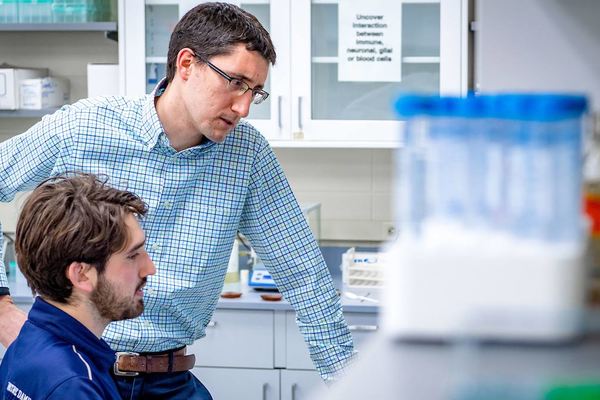
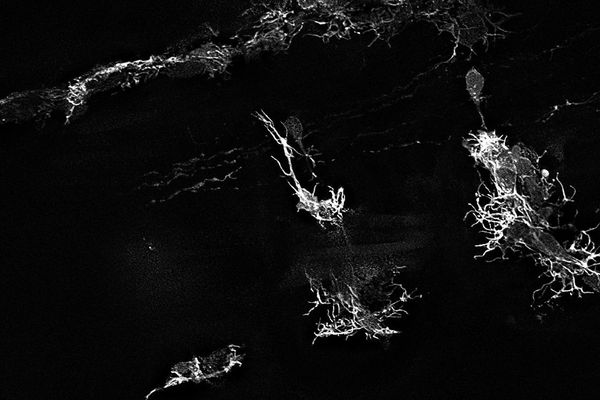
Scientists at the University of Notre Dame discovered microglia actually squeeze through the spinal boundary, crossing into the peripheral nervous system in response to injury.
Rebecca Whelan, associate professor of chemistry and biochemistry, is excited to be a new faculty member at Notre Dame, where she can now do research with the aid of graduate students and postdoctoral researchers.
On April 8, faculty, students, staff, and the public are invited to attend the Harper Cancer Research Institute’s eighth annual Cancer Research Day. This flagship event highlights cancer research at the University of Notre Dame as well as other local cancer organizations.
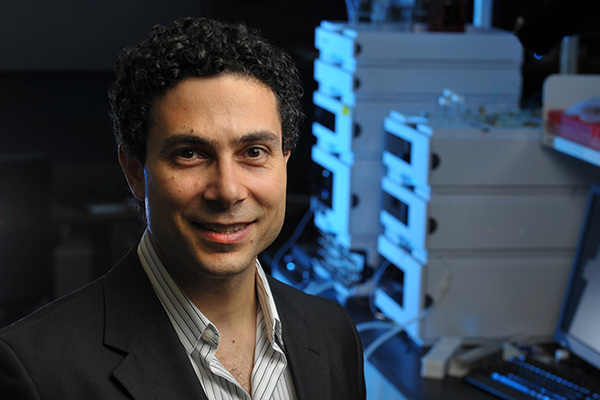
Shahriar Mobashery, the Navari Family Professor in Life Sciences in the Department of Chemistry and Biochemistry, has been awarded the 2019 Emil Thomas Kaiser Award from The Protein Society (TPS) for his research that applies chemistry to the study of proteins.
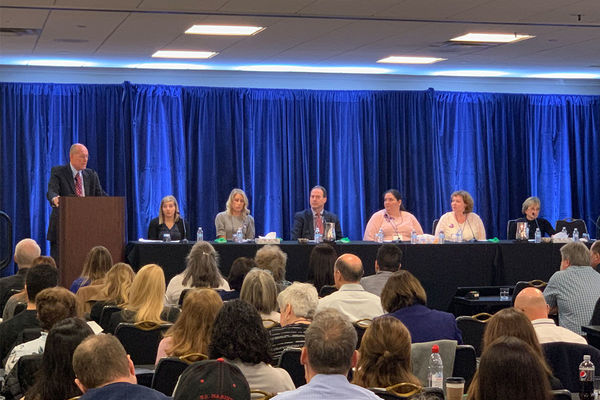
The Ara Parseghian Medical Research Fund (APMRF) at Notre Dame and its collaborators hosted a patient-focused drug development (PFDD) meeting on Niemann-Pick Type C (NPC) on March 18 to bring together those affected by the disease, the Food and Drug Administration, drug developers, and other stakeholders.
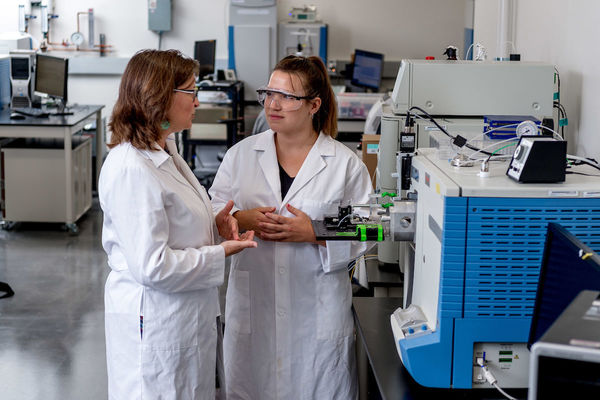
The Biophysics Instrumentation Core Facility is now open to researchers at the University of Notre Dame and external audiences, including those from other academic institutions and industry.
Growing up in South Bend and earning her degree from St Mary’s college, Katharine White never thought she would move back to the area. After all, White experienced the country from coast to coast from historic Boston to sunny California after her undergraduate career. Nevertheless, 12 years after earning her...
New research from the University of Notre Dame suggests that structures released by the infected cells may be used in tandem with antibiotics to boost the body’s immune system, helping fight off the disease.
A new tool may allow researchers to see more of the physiological state of living organisms at the cellular level, according to a study by the University of Notre Dame. Published in Development, the study shows how an open-source application, created by Notre Dame researchers, can utilize two different conventional...
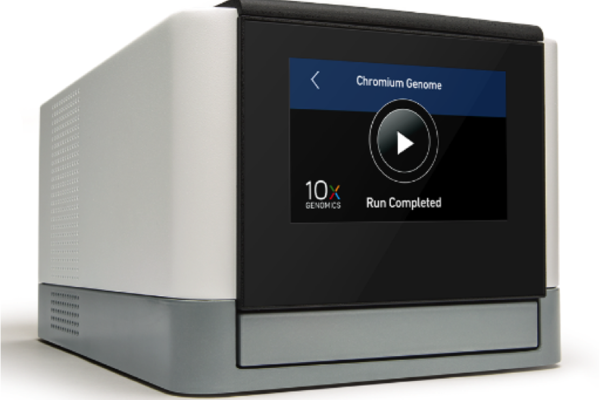
The Genomics and Bioinformatics Core Facility (GBCF) at the University of Notre Dame is now offering researchers access to a new instrument with applications for cell biology, cancer, immunology, and neuroscience research.
New research from Notre Dame could lead to regenerative therapies for people with injuries to their brachial plexus, a group of nerves that starts at the spinal cord and goes into the arm.
Please join us at HCRI's 8th Annual Cancer Research Day!
Research Day is an excellent opportunity to learn about cancer research being conducted in our community. This event includes a poster session, lectures, and a Keynote Address.
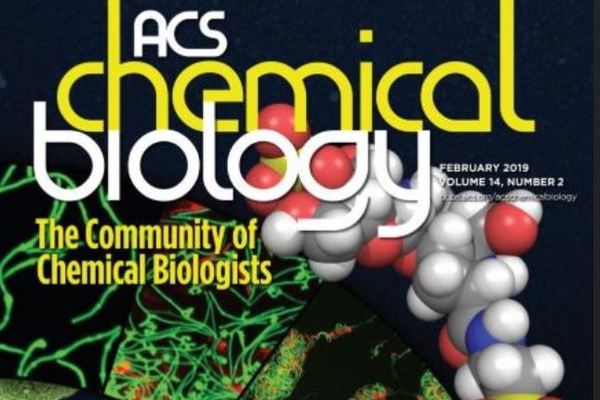
Graduate of the Integrated Biomedical Sciences PhD Program and former Eck Institute for Global Health graduate fellow, David Dik, had an article published in the most recent volume of the esteemed journal, ACS Chemical Biology.
The ADA announced it will fund a $1.625 million Accelerator Award to Matthew Webber, assistant professor in the Department of Chemical and Bimolecular Engineering and faculty member of the Integrated Biomedical Sciences PhD program, to research and develop materials capable of sensing critical drops in blood glucose.
The University of Notre Dame is among just 11 institutions to be named a top producer for both the Fulbright U.S. Student and Scholar programs for the 2018-19 academic year, a first for the University, according to the U.S. Department of State’s Bureau of Educational and Cultural Affairs.