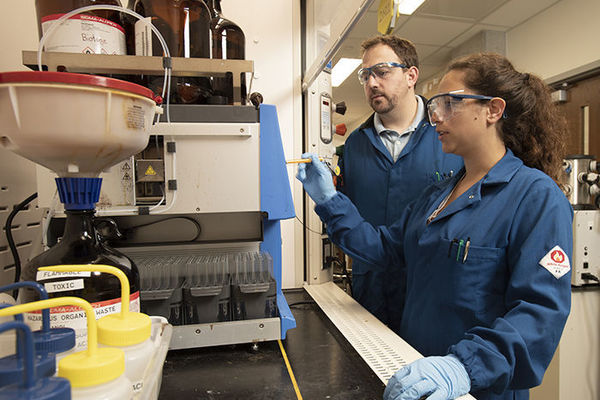
A new study from the University of Notre Dame shows drugs used to treat high cholesterol could interfere with the way breast cancer cells adapt to the microenvironment in the brain, preventing the cancer from taking hold.
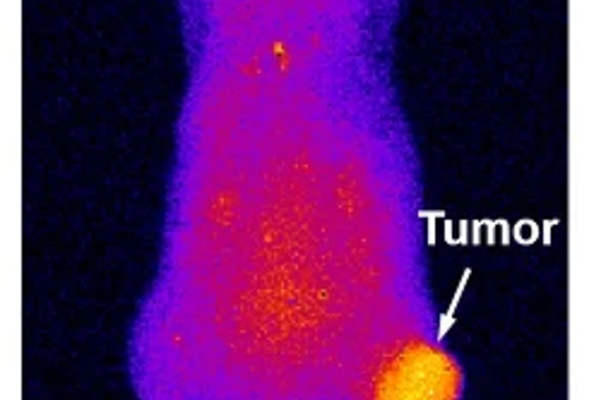
Fluorescence imaging has been a boon to research and medicine because of its ability to examine affected areas noninvasively. But the dyes used for these purposes have their disadvantages, and as resolution needs have grown stronger, the stakes for accuracy have increased exponentially. …
The hero in Mary Shelley’s “The Last Man,” her second sweeping political science fiction after “Frankenstein,” is left alone in Rome, in a post-apocalyptic world. A global plague apparently took the lives of everyone else, yet he discerns a duty to forge ahead, no matter what. Published in…
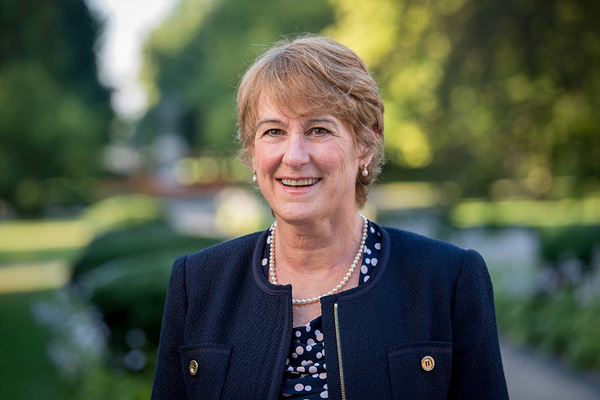
Mary E. Galvin, William K. Warren Foundation Dean of the College of Science, addressed the issue of inequality with the students, faculty, and staff of the college: Like many of you, I am deeply saddened by the recent killings of George Floyd, Breonna Taylor and Ahmaud Arbery and by this...
The purpose of the project, “Dissipative non-equilibrium supramolecular hydrogels using fuels,” is to create a new material paradigm at the intersection of supramolecular chemistry and soft materials. He and his team will be studying materials and systems that exhibit transient states and enable properties of material formation in the presence of a fuel...
2020 Warren Newsletter Originally published by Warren Family Center at "drugdiscovery.nd.edu":https://drugdiscovery.nd.edu/news/spring-2020-the-warren-roundup/…
Men with penile squamous cell cancer could benefit from a combined approach to their cancer therapy, because targeted chemotherapy or immunotherapy alone – which may work for other kinds of cancers – is not effective for this cancer, according to a study by University of Notre Dame researchers and collaborators.
Steven Corcelli, Professor in the Department of Chemistry & Biochemistry and Associate Dean for Interdisciplinary Studies and Faculty Development, has been selected as the 2020 recipient of the Thomas P. Madden Award. This award honors the faculty member who contributed the most to the teaching of first-year students.
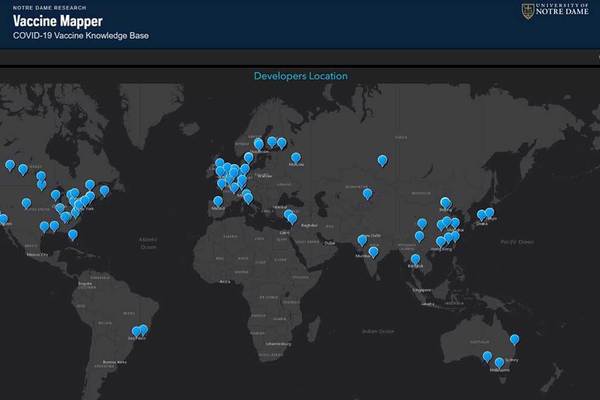
Researchers from the University of Notre Dame’s Center for Research Computing are recording details about the coronavirus vaccine candidates currently in development as well as the progress of those candidates via a new interactive online tool.
The University of Notre Dame will welcome students back to campus for the 2020-21 fall semester the week of Aug. 10, two weeks earlier than originally scheduled, and will forgo fall break in October and end the semester before Thanksgiving.
Faculty are encouraged to apply for a new, competitive funding opportunity to support research into diagnostics or therapeutics for SAR-CoV-2 as well as other concerns related to COVID-19.
Father John Jenkins, Provost Tom Burish, and Provost-Elect Marie Lynn Miranda wrote to the faculty this week to describe the underlying principles that govern the University’s thinking toward the return of in-person classes, the opening of laboratories, and other measures.
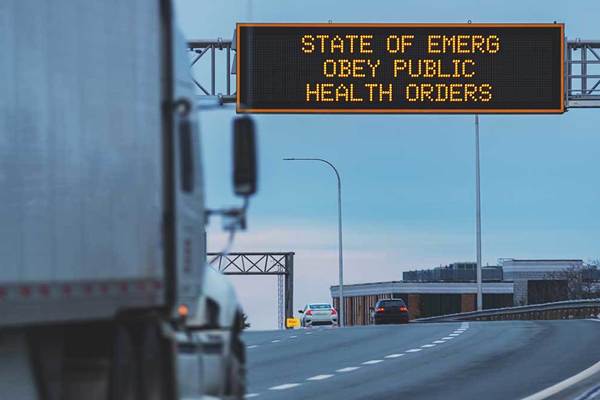
A new study by epidemiologists at the University of Notre Dame suggests social distancing measures at current levels in many states may need to be maintained until the summer to avoid a potentially deadly resurgence of the coronavirus.
On February 29th, over 200 students from 46 area elementary, middle, and high schools participated in the 2020 Northern Indiana Regional Science and Engineering Fair (NIRSEF) at Notre Dame, which fostered curiosity and empirical thinking in young scientists of all ages.
Castellino, who has no immediate plans for retirement, remembers highlights from his research, teaching, and University culture during the past 50 years.