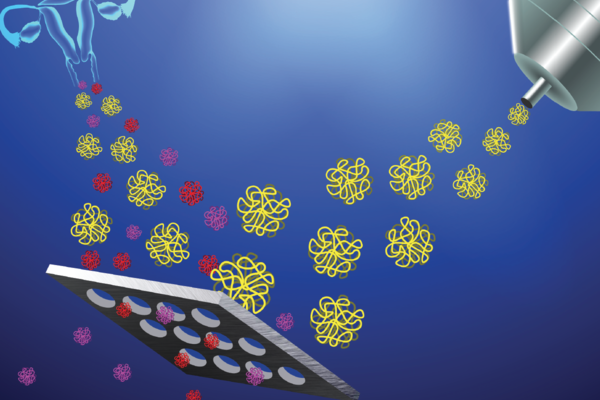

In a study published in the journal Chemical Science, researchers at the University of Notre Dame found that elevated concentrations of proteins within the droplets triggered a folding event, increasing the potential for protein aggregation — or misfolding — which has been linked to neurological diseases including Alzheimer’s disease and...
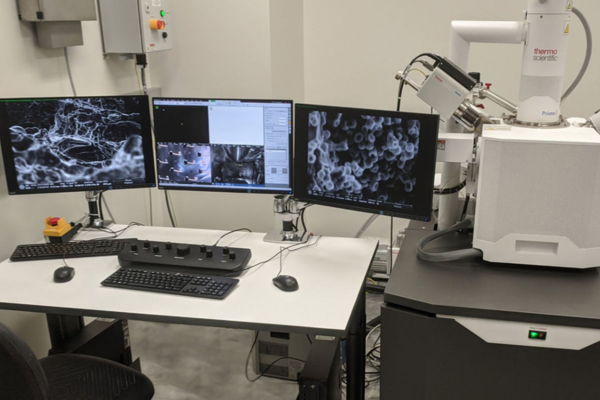
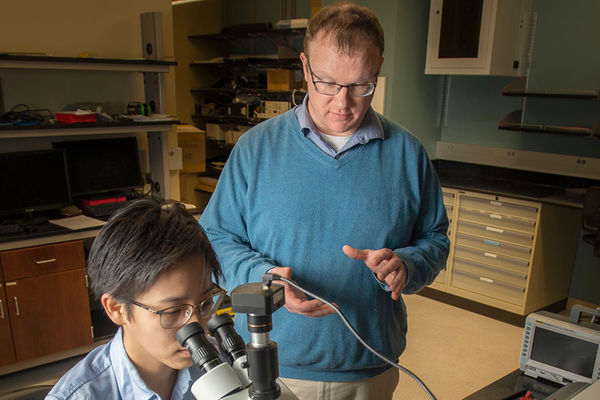
The new Analytical Science and Engineering at Notre Dame Core Facility is now available to faculty, staff, and students at the University of Notre Dame, as well as external academic and industry users.
Researchers at the University of Notre Dame and the University of Wisconsin-Madison are working to understand the impact of ascites on the spread of ovarian cancer by developing a new analysis technique.
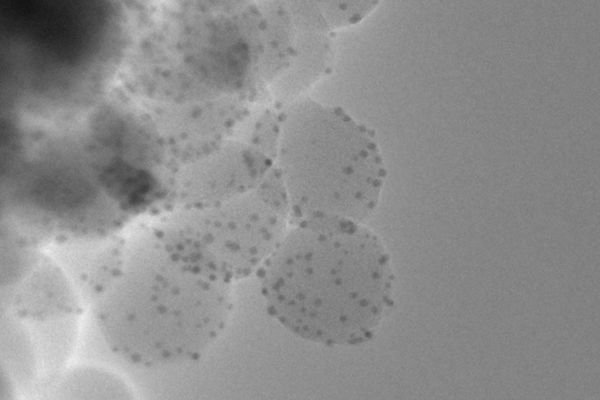
According to the World Health Organization, one of the biggest health threats around the world is antibiotic-resistant bacteria. Researchers at Notre Dame are working to combat this problem by developing a nanoparticle-based system.
Thomas O’Sullivan, assistant professor of electrical engineering, is leading a team to develop the first “smart” breast clip, a device that could revolutionize breast cancer treatment.
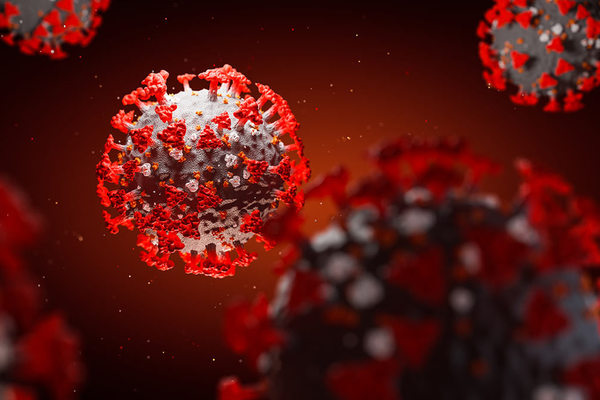
The report details the University’s preparation for the return of students in August for in-person learning, the dramatic increase in cases during the first 10 days of classes, the decision to keep students on campus but to restrict interaction and teach only online for two weeks, and the robust mitigation measures...
The University is hopeful that the enhanced testing, Campus Compact and the many continuing measures that were implemented last semester will keep the campus and broader communities safe.
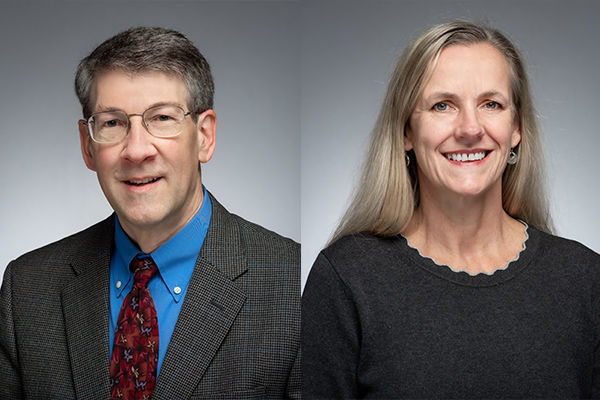
Michael Hildreth, associate dean of research in the College of Science at the University of Notre Dame, will serve as interim dean of the College of Science beginning January 1, 2021. That day, Mary Ann McDowell, associate professor in the Department of Biological Sciences, will begin serving as interim associate...
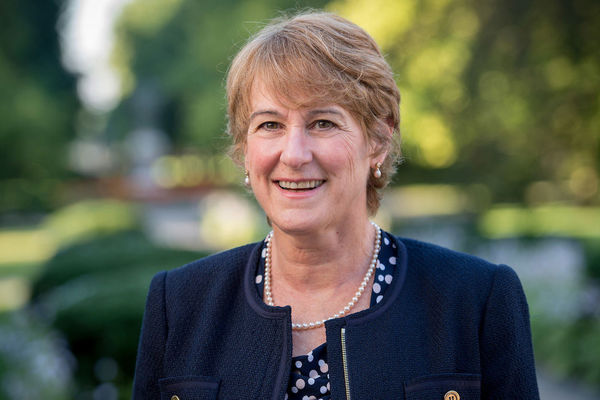
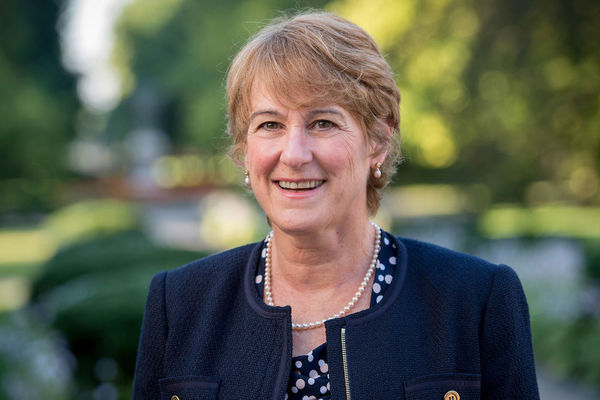
More than 25 members of the advisory council for the College of Science at the University of Notre Dame have contributed over $11 million to endow the Science and Engineering Scholars Program in honor of Mary E. Galvin, the William K. Warren Foundation Dean of the college.
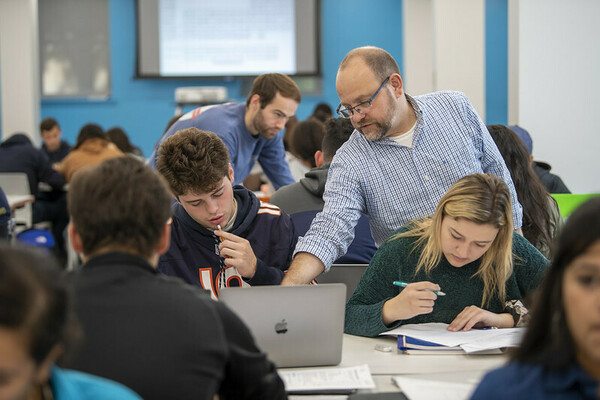
“This program is, wow,” said Chelsea Popoola, a math major who plans to attend medical school. The small classes allowed her to learn the material in a tight-knit environment. “I wish I had better words to explain how much this program has done for me. Whenever we need help with...
Molecular parasitologist Angana Mukherjee is excited to work with the Boler-Parseghian Center for Rare and Neglected Diseases (CRND) to study the genetics of antimalarial drug resistance, in her new position as an assistant research professor in the Department of Biological Sciences.
Mary E. Galvin, the William K. Warren Foundation Dean of the College of Science at the University of Notre Dame since 2015, recently announced she will step down…
Advanced Diagnostics and Therapeutics has become the Institute for Precision Health, a re-envisioning that engages scientists, engineers, and clinical practitioners in research, education, and entrepreneurship programs that advance individualized health and wellness.
The Warren Center for Drug Discovery invites new proposals for projects that are associated with drug discovery. In particular, projects associated with small molecule synthesis (libraries or molecular probes), hit validation, lead optimization, mid-sized scale up, assay development, protein purification,…
The Iquitos trial was part of a multi-year effort led by scientists at the University of Notre Dame to determine the protective efficacy of spatial repellents to prevent human infection with pathogens that cause diseases such as malaria, Zika and dengue, spread through mosquito bites.
In newly published research in the journal Cell, researchers showed that one type of cell important for immunity, called a myeloid cell, can suppress the immune response — which has the effect of allowing breast cancer cells to metastasize to the brain to form secondary tumor cells there.
As part of the statewide partnership, Notre Dame and IDP partners can securely share data and best practices that benefits research and other projects, components, and reports for datasets, and shares the results of research projects relevant to the goals of the IDP.