The venous blood test is the gold standard for biomarker detection in blood but it's painful, invasive, and does not enable continuous monitoring of blood contents. Blood is taken out for analysis, and the results leave patients with mere snapshots of their health condition instead of the ability…
A transatlantic effort is transforming cancer research and care. The University of Notre Dame's Harper Cancer Research Institute is conducting collaborative, cutting-edge research with the University of Galway's Cancer Centre. The initiative is aptly titled Biseach — an Irish word meaning “to heal,…
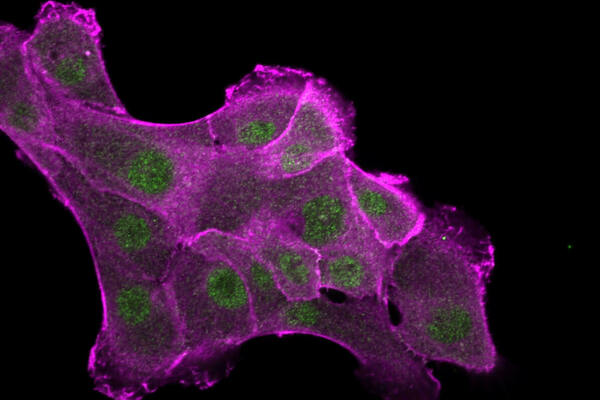
At 10 one-millionths of a meter wide, a single human cell is tiny. But something even smaller exerts an enormous influence on everything a cell does: proton concentration, or pH. On the microscopic level, pH-dependent structures regulate cell movement and division. Altered pH response can accelerate…
The symptoms come on quickly — acute fever, followed by debilitating joint pain that can last for months. Though rarely fatal, the chikungunya virus, a mosquito-borne illness, can be particularly severe for high-risk individuals, including newborns and older adults. While the virus is common…
BELS, which is a joint initiative of Notre Dame’s College of Engineering and College of Science and a key priority in the University’s strategic framework, supports research that applies engineering principles to biological systems. The BELS Initiative works to create new technologies and approaches to the detection, prevention, and treatment...
Three collaborative, multi-unit teams have been awarded funding by the University-wide Bioengineering & Life Sciences Initiative to advance health-related research and education.…
A breakthrough by researchers at the University of Notre Dame has uncovered a crucial step in the life of a protein that may determine whether it works properly or instead ends up misfolded and non-functional. Their findings reveal a surprising race at the heart of protein folding, and offer new...
Research from the University of Notre Dame is shedding light on why Black women are likely to have early-onset or more aggressive subtypes of breast cancer. The study published in iScience found that a population of cells in breast tissues, dubbed PZP cells, send cues that prompt behavioral changes that...
Twelve-year-old Lauren Eglite was thrilled to attend a Notre Dame football game with her father, Erik, in 2017, even though her acute peanut allergy demands constant vigilance. She was even more excited when the stadium’s brand-new video board aired an NBC Fighting…
On Tuesday, May 13, John T. McGreevy, the Charles and Jill Fischer Provost at the University of Notre Dame, announced the winners of the 2025 faculty awards. …